
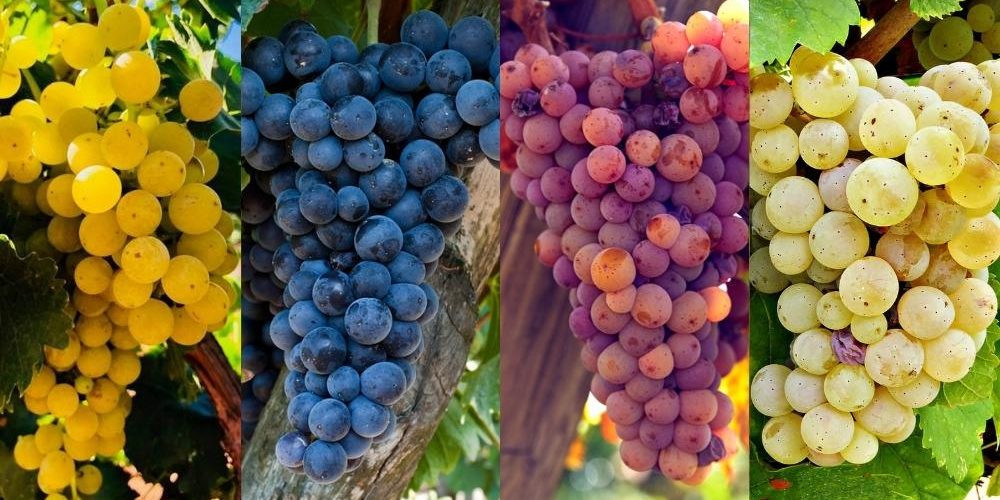
Immaginando un viaggio nelle vigne del mondo, discovering the scents of the grape varieties cultivated, we can find that by bringing our nose close to the bunches, solo in pochi emanano un profumo e che tutti gli altri appaiono inodori.
At the end of our tour, we will thus discover that unscented grapes represent almost all of the oenological varieties.
A questo punto possiamo chiederci come mai se la maggior parte delle uve non sono profumate, the wines are then so fragrant e diversi tra loro.
A further question we could ask ourselves is what is the meccanismo che porti alla formazione dell’wine smell, il quale avviene durante la fase di trasformazione dell’uva in vino. La risposta sta nella fermentazione alcolica, processo alla base della trasformazione dell’uva in vino.
Ritornando al nostro viaggio, possiamo quindi distinguere, tre classi:
- vitigni aromatici
- vitigni neutri
- vitigni semi-aromatici
Vitigni aromatici
Le uve profumate, they are defined as such because they are molto ricche di composti volatili able to spread freely in the air and capable, once reaching the olfactory epithelium, of generating well-defined and recognizable odors. By bringing the berries of these varieties to your nose, you can smell the scent.
The aromatic notes of these varieties will also be perceptible in the wine, despite the production of other odors during alcoholic fermentation.
Esempi of aromatic grape varieties are the varieties of Moscato, Gewürztraminer, Malvasia e Brachetto. For example, the first two varieties are characterized by bunches that emanate floral notes.
Vitigni neutri
Le uve definite neutre sono caratterizzate da profumi primari meno spiccati. They therefore have an unrecognizable varietal character, since the concentration of aromatic molecules is very low. What makes the differenza per questi vitigni is therefore the terroir, inteso come un’interaction between multiple factors such as soil, climate, grape variety, and winemaker.
A questa classe appartengono la maggior parte dei vitigni tra cui: Cortese, Fiano, Trebbiano, Aglianico, Barbera, Gamay, Nebbiolo, Refosco, Sangiovese…
Vitigni semi-aromatici
These varieties despite having a well-defined olfactory identity, solo in parte sono riconducibili ai profumi primari dell’uva. In this case, it will not be enough to bring to the nose l’acino, but you will also have to bring it to the mouth and chew it. Masticandolo scopriremo tramite la via retronasale, che questi acini rilasciano aromi molto chiari e definiti. This phenomenon usually occurs slightly later than the breaking of the berry in the mouth; in fact, we speak of delayed appearance of the fragrance.
This is typical of berries of the variety of Sauvignon Blanc. Se accostiamo al naso degli acini di questo vitigno, ci accorgeremo che sono quasi inodori, ma se masticati ed ingeriti, rilasceranno intensi aromi riconducibili a note erbacee, tipiche della pianta del bosso e note di frutta esotica. Masticando a lungo e sorseggiando lentamente il mosto, avremo un’intensa esplosione di aromi nella parte posteriore della bocca. Questo fenomeno fu descritto come il “ritorno aromatico” del Sauvignon Blanc. This indicates that probably the molecules responsible for these fragrances are trapped in the grape in a silent form. During chewing, through the action of some enzymes present in the mouth, such trapped molecules are released. The same phenomenon occurs after the alcoholic fermentation of the must of this variety, indicating that the activation mechanism of the aromatic molecules is analogous to what happens in the oral cavity following chewing. Commonly these silent aromas are called bound, but from a chemical point of view they are defined as aroma precursors.
Esempi di vitigni semi-aromatici sono Merlot, Cabernet Sauvignon, Cabernet Franc, Chardonnay, Riesling, Sauvignon Blanc, Glera, Sylvaner, Kerner, Müller Thurgau.
E tu quale preferisci tra questi vitigni ?

 EN
EN  IT
IT