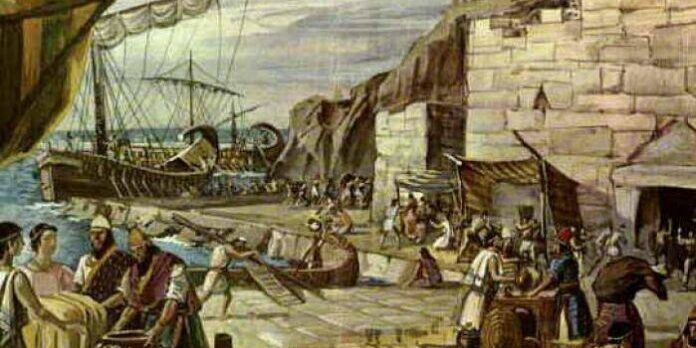
The history of the vine is a long and winding path from which it is difficult to understand which road has been taken and in the right sequence.
Attualmente in base alle informazioni generali che abbiamo sulla storia del vino, il commercio via mare ebbe il suo sviluppo con i Fenici, abilissimi navigatori e costruttori di navi.
Le anfore fenicie, molto simili a quelle cananee, sono sempre presenti nei ritrovamenti archeologici dei mari occidentali. Successivamente anche i Greci, lentamente, iniziarono a svegliarsi nel corso del IX secolo a. C., thanks to the frequent contacts they established in that period with the coasts of Asia Minor, Syria and the Caucasian regions of the Black Sea.
Commercial activity, which began in the Aegean Sea, subsequently developed in the Ionian Sea and the Tyrrhenian Sea, very often along the routes and towards the settlements of the Phoenicians in the West. Following a chronological path, the commercializzazione del vino si diffuse verso Occidente, favorito anche dagli Etruschi, che ne permettono il mito del vino, come testimoniano i numerosi ritrovamenti di kylix (coppe destinate al consumo del vino) nei simposi dedicati a Dionisio. Dato il carattere ideologico-religioso del consumo del vino nel mondo classico, il servizio simposiaco, costituito dalla ceramica attica e da vasellame bronzeo etrusco, era destinato esclusivamente alla preparazione e consumo del vino durante il banchetto. The richness of ancient artifacts related to various wine containers is largely due to the discovery of these furnishings in the tombs of men, as indicators of social status.

 EN
EN  IT
IT